
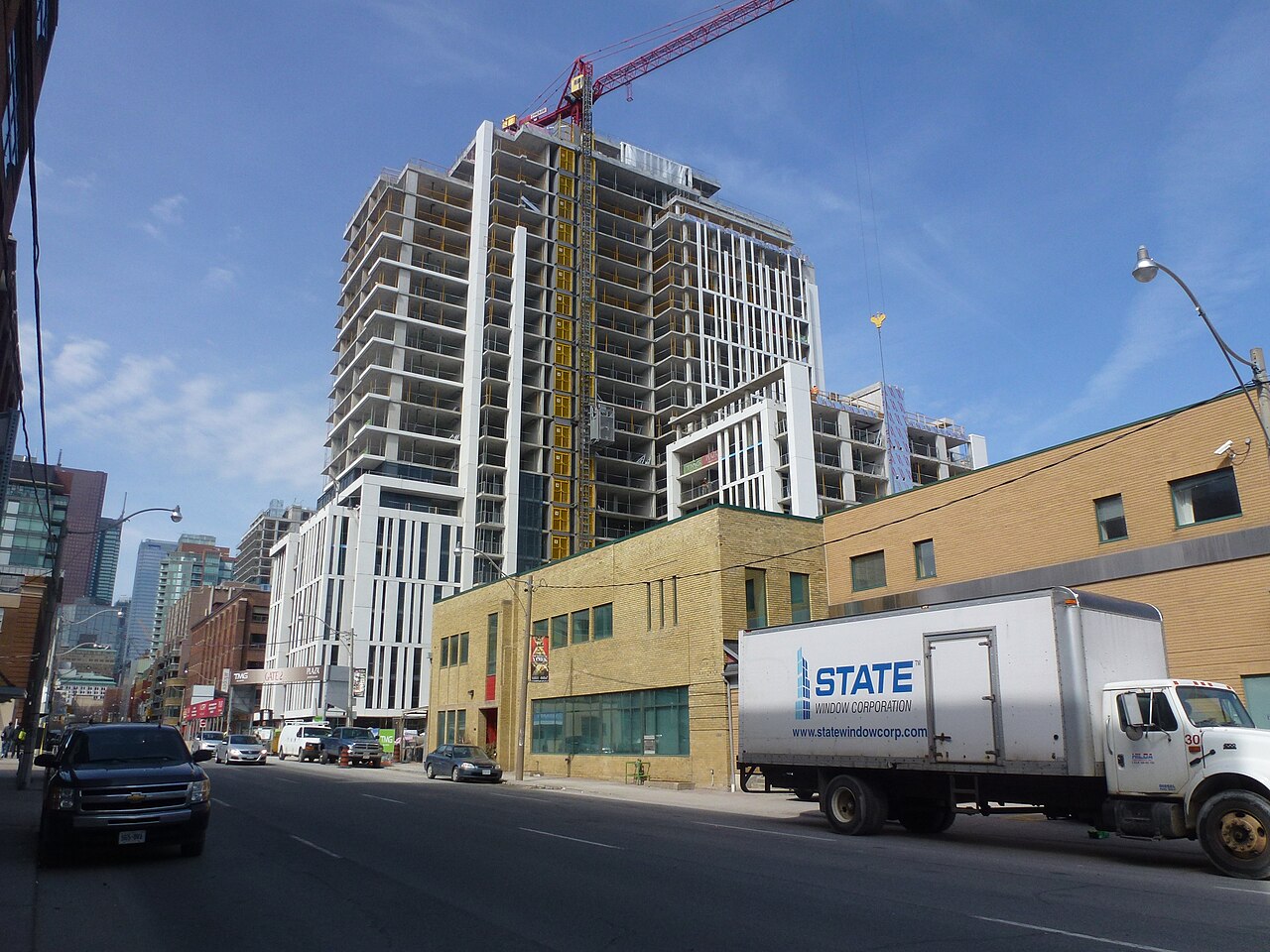
There’s a specific kind of tired that comes from doing everything right and still not being able to afford a place to live. You finished school, you work hard, maybe you’ve saved for years, and the listings still read like a cruel joke. Or you’re renting, watching a number climb that has nothing to do with your raises. That isn’t a personal failure. The market genuinely moved out from under a whole generation, and being angry about it is the only sane response.
So when someone hands you a simple culprit, too many newcomers all at once, it scratches the itch. More people wanting homes, fewer homes to go around, prices up. There’s a grain of truth in the demand part, and we’ll get to it honestly. But if you trace the actual decisions that built this shortage, you find something the blame-the-newcomer story leaves out: we made a series of choices, over forty years, to stop building the kinds of homes people could afford. The pain is real. The cause is mostly a policy story.
We need millions of homes we never built
Start with the size of the hole. CMHC estimates Canada needs about 3.5 million additional housing units by 2030, on top of everything already in the pipeline, just to bring affordability back to early-2000s levels, with roughly 60% of that gap in Ontario and British Columbia (CMHC).
A gap that big doesn’t open in a year or two. It’s the slow compounding of homes not built, decade after decade. To see how, you have to look at who used to build them.
The government quietly left the building
For much of the postwar era, Canada didn’t rely on the private market alone. Governments directly funded co-ops, non-profits, and public housing: the homes built to be affordable on purpose, not by accident. Then that stopped. As researchers at Simon Fraser University describe it, the federal government stopped funding new social housing in 1993, and CMHC’s own role shifted over the following years from helping build homes toward insuring mortgages (The Conversation).
The result is that today, social and non-market housing makes up only about 4% of Canada’s housing stock, a thin cushion compared with many peer countries (The Conversation). When the floor of affordable, non-market housing is that low, almost everyone gets pushed onto the open market to compete, and the prices show it.
The “missing middle” went missing
It isn’t only the public side that retreated. The private market quietly stopped building rental, too. Purpose-built rental apartments, the ordinary mid-rise buildings that house working families, boomed in the 1960s and early 1970s under favourable tax treatment, then fell off a cliff as those incentives were stripped away and developers pivoted to condos.
How far did it fall? By CMHC’s own count, Canada completed 63,545 rental apartment units in 1970. In 2024, after years of a building “recovery,” we managed 84,273. But adjusted for our much larger population, that’s still only about half the per-capita pace of the 1970s (CMHC Housing Observer). We have been under-building the exact homes renters need for half a century.
We didn’t run out of land or workers or know-how. We changed the rules so that the homes most people can actually afford became the homes least worth building.
Zoning that says no, and fees that pile up
Two more structural brakes finish the picture. The first is zoning. Across much of urban Canada, the rules have long reserved enormous shares of residential land for single-detached houses only, quietly making it illegal to build the duplexes, triplexes, and low-rise apartments that would let more families live near jobs and transit. That’s why “end single-family zoning and increase density near transit” has become the headline reform everywhere (The Conversation).
The second is cost piled onto every new unit. CMHC analysis released in late 2025 found that development charges alone can add 8 to 16% to the price of a new home. On a two-bedroom condo, that’s tens of thousands of dollars, ranging from about $39,600 in Ottawa to $121,500 in Markham (Global News / CMHC). Add slow approvals on top, and the homes we most need become the slowest and priciest to deliver.
Where immigration honestly fits
Here’s the fair part, said plainly. Population growth, including immigration, adds demand, and most newcomers rent first, so in a market this starved of supply, more arrivals do push prices and rents up at the margin. Pretending otherwise would be dishonest, and CMHC’s own scenarios show faster population growth widens the gap.
But notice the shape of it. Demand is landing on a system we deliberately made fragile: the abandoned public housing, the rental we stopped building, the density we zoned out, the fees we layered on. Newcomers didn’t write the zoning bylaw or cancel the housing program in 1993. They’re competing for the same scarce, overpriced apartments you are, squeezed by the same machine.
The hopeful part
There’s something almost freeing in seeing it this way. If the cause were simply “too many people,” the only fix would be turning on each other, and that never builds a single home. But the real causes are choices, and choices can be remade. Build a lot more, especially non-market and purpose-built rental. Legalize the missing middle. Stop loading the cost of growth onto the people trying to buy their first place.
None of that requires resenting your neighbour. It requires aiming the frustration, which is completely earned, at the rules that earned it.